4-24
The dangling pale yellow flowers of Wild Oats are opening and Common Toothwort, a mustard relative, needs only a little sunshine to turn its 4 petaled white flowers skyward.
John
 |
| Wild Oats |
 |
| Toothwort |

4-24
The dangling pale yellow flowers of Wild Oats are opening and Common Toothwort, a mustard relative, needs only a little sunshine to turn its 4 petaled white flowers skyward.
John
|
| Wild Oats |
|
| Toothwort |
4-23
Field Penny-cress, AKA Cow Cress. am alien member of the mustard family is starting to flower.
John

4-22
Scarlet Elf Cup fungus gives a touch of color to the woods and Lesser Celandine, a garden escape, brightens open damp woods.
John
 |
| Lesser Celandine |
 |
| Scarlet Elf Cup fungus |
4-21
Trout Lilies are approaching their peak flowerings, the tiny 'snow-flake' flowers of Miterwort are open and cut-leaved toothwort needs only a bit of warmth to fully open its white four-petaled flowers.
John
 |
| Trout Lily |
 |
| Miterwort |
 |
| Cut-leaved Toothwort |
4-20
Small-flowered Buttercups, AKA Kidney-leaved Buttercups, are the first of many buttercups to flower.
John

4-19
Wild Ginger's flowers look like carrion, attracting flesh eating flies and gnats as pollinators.
John

4-18
An occasional Long-spurred Violet is in flower and Spicebush is yellowing the swamps. The spore bearing 'cones' of Horse Tails are also up.
Also seen but not pictured: an Osprey and a Mustard White butterfly.
John
 |
| Horse Tails |
 |
| Spicebush |
 |
| Long-spurred Violet |
4-17
American Fly Honeysuckle is opening a few flowers - and a few leaves.
John

4-16
Field Chickweed and Purslane Speedwell are flowering in agricultural fields and Northern Blue Violets are coloring door yards and damp woods.
Plus, at least two Bumblebees were active this afternoon!
John
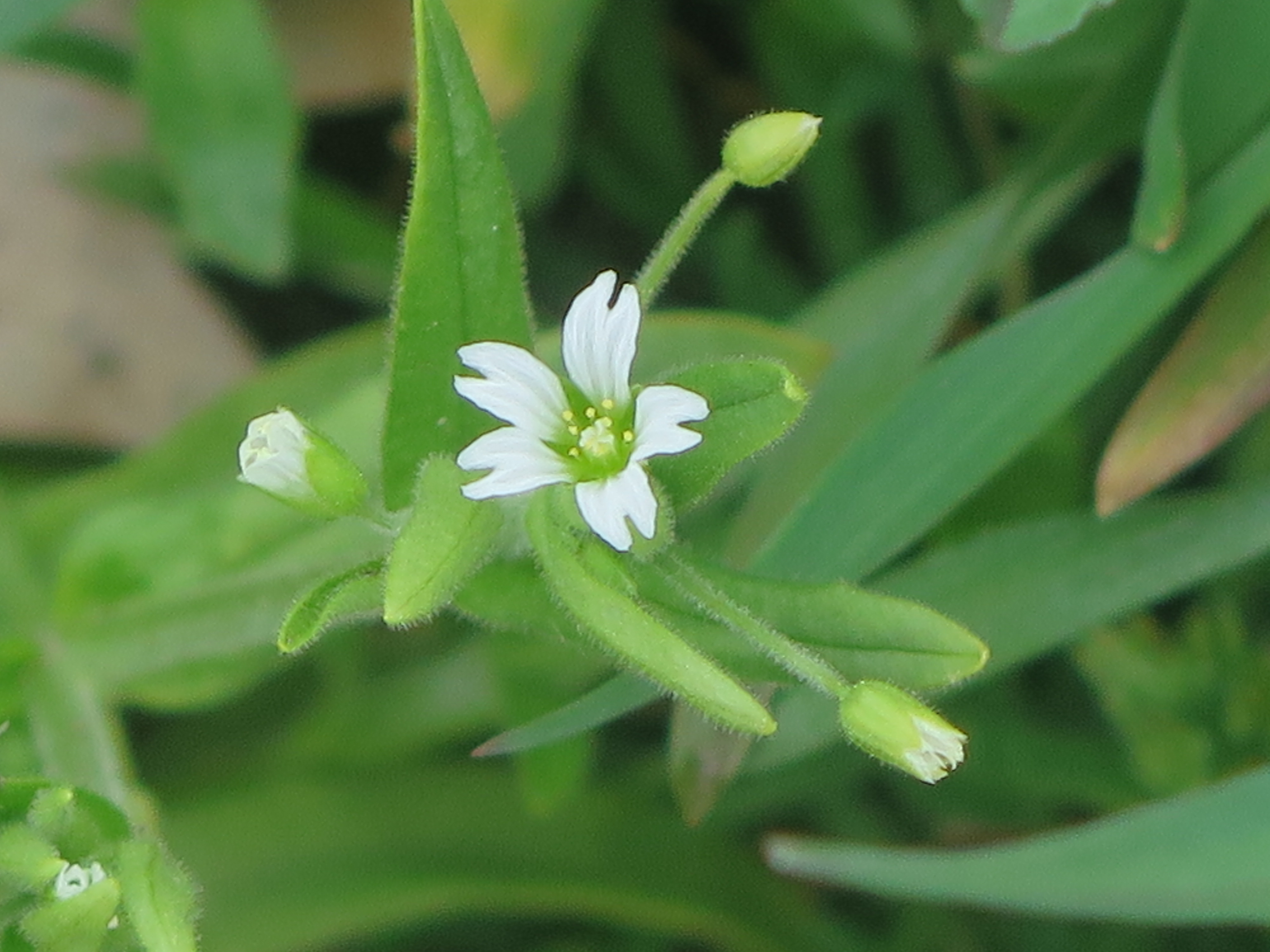 |
| Field Chickweed |
 |
| Purslane Speedwell |
 |
| Northern Blue Violet |
 |
| Northern Blue Violets |
 |
| Bumblebee |
4-15
Red Trillium, AKA Purple Trillium and Wake Robin, is opening flowers, a few Wild Strawberries are following suit and Marsh Marigold, AKA cowslip, is brightening wet places.
Seen but not pictured, one Gray Comma butterfly and one Milbert's Tortoiseshell butterfly.
John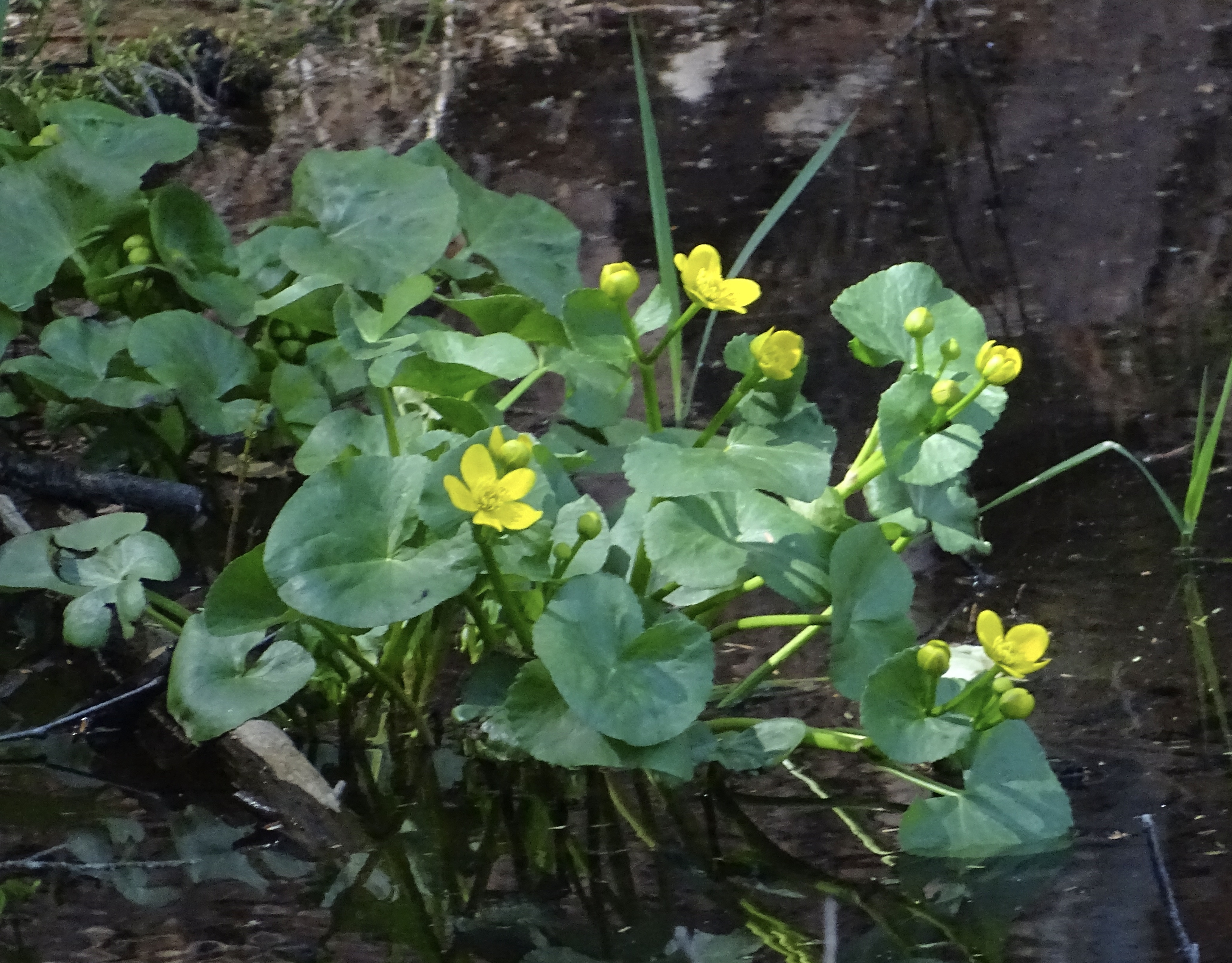
Marsh Marigold 
Wild Strawberry 
Red Trillium
4-14
Garter snakes are out of hibernation.
And an array of wildflowers including Round-leaved Yellow Violets, Blue Cohosh, Purple Rock Cress, Dutchman's Breeches and Bluets chose today to start their flowerings.
Also seen flowering on a high inaccessible ledge, wild Ginger. No picture possible.
John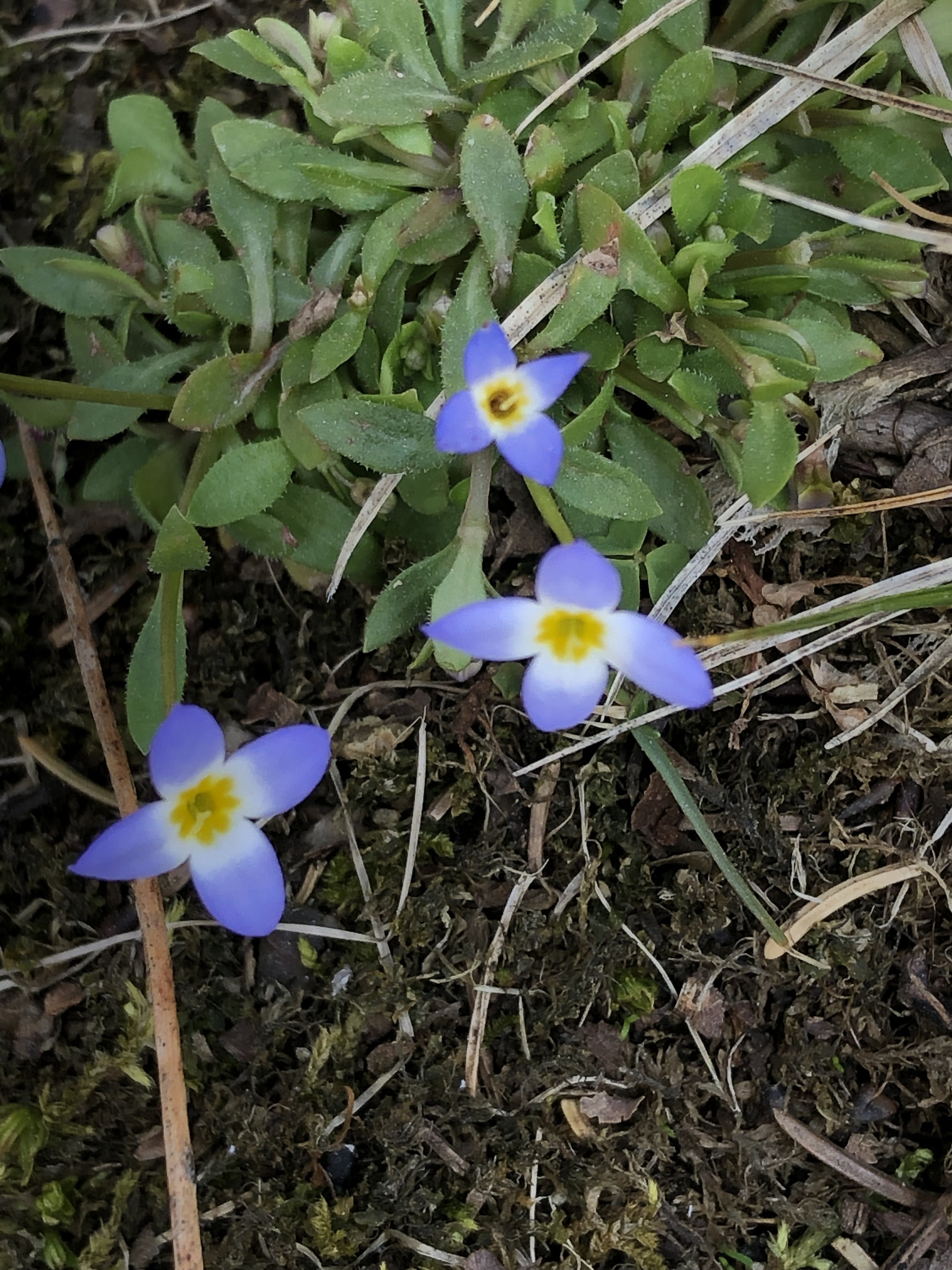
Bluets 
Dutchman's Breeches 
Purple Rock Cress 
Blue Cohosh 
Round-leaved Yellow Violet
4-13
The pink (or white0 flowers of Trailing Arbutus, AKA Mayflowers, contrast nicely with their leathery evergreen leaves.
John

4-12
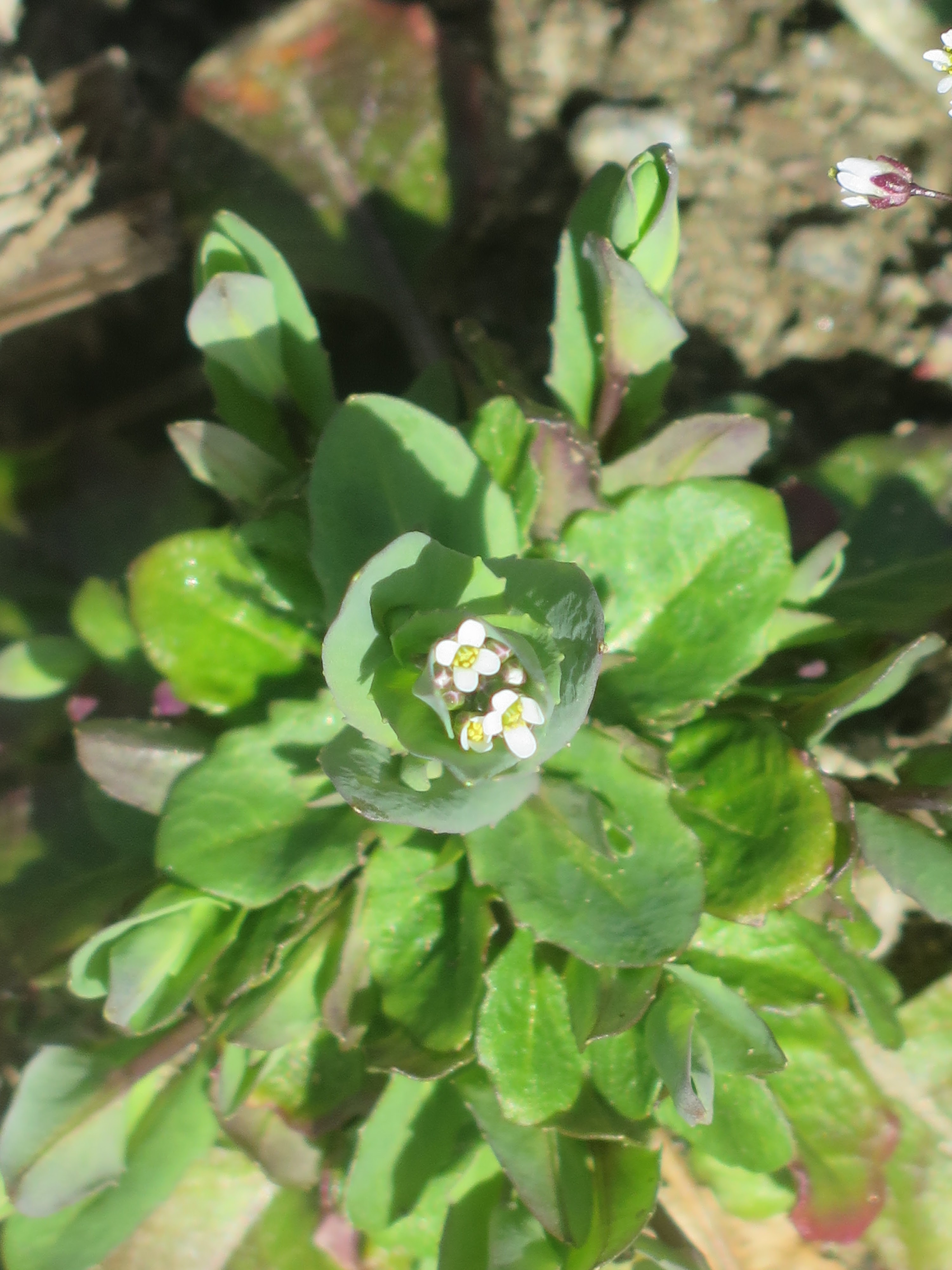
Although only an inch or two above ground Field Pennycress has opened a few flowers.
John
4-11
A Mourning Cloak butterfly was airborne today. These butterflies overwinter as adults and are one of the first species seen each spring. As they often precede flowers they feed on tree sap, scat and carrion.
Also seen, but not photographed, two Bats flying in bright 2 pm sunlight.
John

4-10
Bloodroot, a diminutive member of the Poppy clan, is opening its flowers.

And in rich woods the pink veined white flowers of Spring Beauties, a colony forming species, are starting to carpet the forest floor.
John

4-6
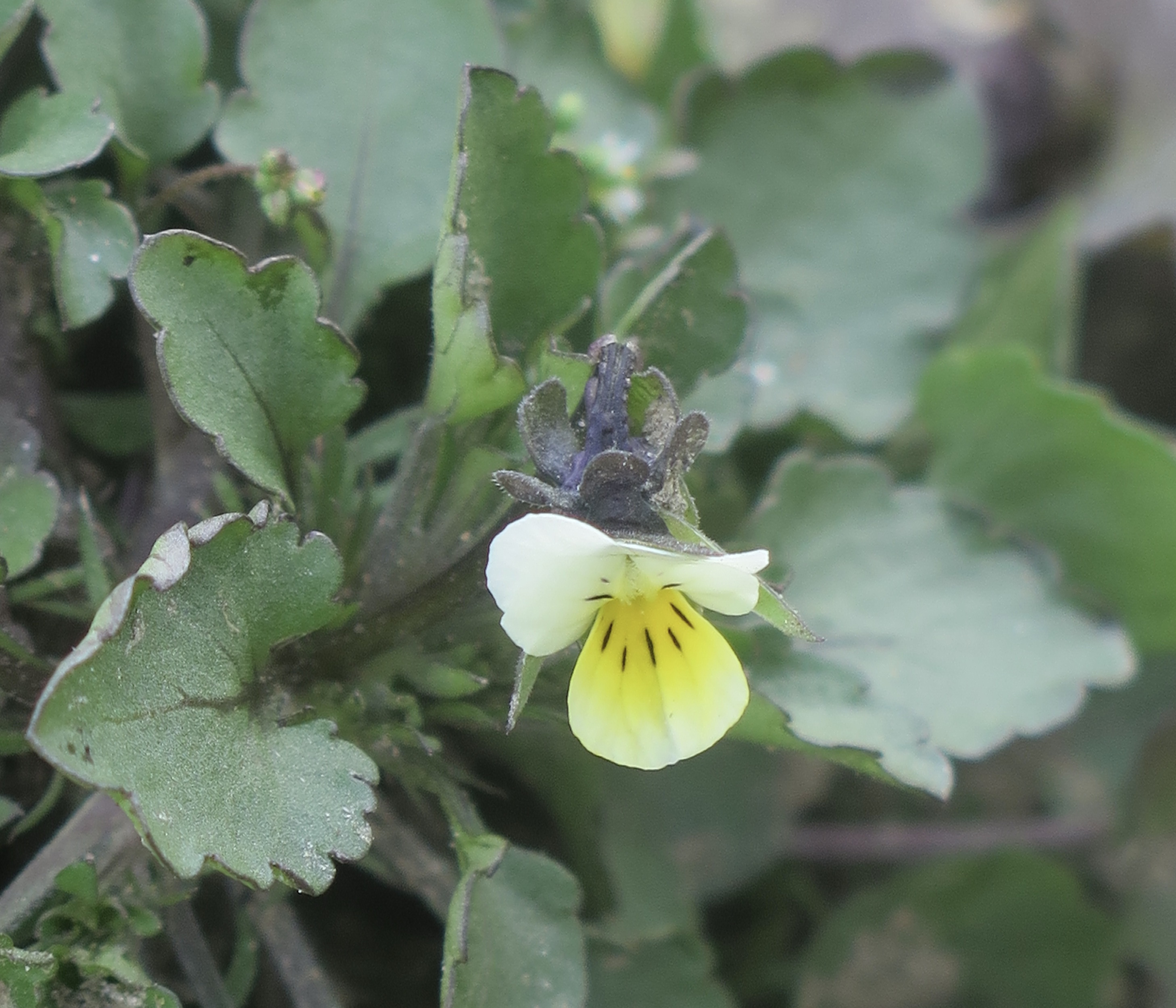
Field Pansies, originally from Europe, are opening a few flowers in seasonally idle agricultural fields.
John
4-5
Purple Dead Nettle - yet another early flowering alien - is putting out a few flowers.
John

4-4
Ground Ivy, AKA Gil-over-the-ground, a mint family member, is starting to flower.
John

3-30
A few Common Dandelions are showing their faces.
Also seen but not shown - a Phoebe, a Kingfisher and 5 sub-adult Bald Eagles.
John

3-27
Myrtle, a commonly cultivated and commonly escaped alien species, is opening a few flowers. This plant is also known as Periwinkle.


3-26
Shepherd's Purse - a common plant of gardens and waste places - is said to flower from early spring to late fall and sometimes in winter. The triangular seed pods which gave this species its common name will be more noteworthy than its tiny flowers are now.
John

3-25
Today's warmth opened a few Hepatica flowers. In the coming weeks each plant will produce a new set of leaves.
John


3-22
The tiny stigma of Beaked Hazelnut's female flowers are opening but easily overlooked. The shrubs male catkins are much more noticeable.
Hazelnuts are edible and sweet, a fact understood by chipmunks everywhere.
John

3-21
Early Saxifrage, AKA Rock Break, has opened a few flowers. This plant faors cracks and crevasses in ledges as the common name implies.
John

3-20
The little, deeply cleft 5 petaled flowers of Common Chickweed and the even littler 4 petaled flowers of Whitlow Grass are opening. both species are alien. And both could easily be overlooked.
John
 |
| Common Chickweed |
 |
| Whitlow Grass |
3-19
Last night a Woodcock was "peenting" in a field near my house.
And, the tiny white flowers of Mouse -ear Cress - another early flowering alien - are open.
Joh

3-18
The ditch in West Dummerston village is full of Coltsfoot. Like many flowers coltsfoot is only open in full sun light. It is also an alien which explains its very early flowering as aliens tend to flower early. But, today it is a more than welcome sight!
John


