Welcome

To all those interested in the natural world. Please add your sightings.

In the woods we return to reason and faith-Emerson

Best-Lynn

Friday, April 29, 2011

4-29
The flowering season is in high gear. Miterwort, wild ginger, blue cohosh, spring
beauties, wild starwberry, toothwort and hobblebush were among the species that I saw blooming for the first time today. See more pictures on next blog. John
I heard my first warbler- at least one that I can identify--the black throated green warbler.
I was in a meadow in Guilford and the sounds resounded. I could identify the yellow common throat, red-wing black bird, etc, but the wonderful moment was went a Canadian Goose flew only 30 feet overhead and I could hear the whir it made when its wings were flapping.

Thursday, April 28, 2011


4-28
It was a day of heat, humidity and thunderstorms: growing weather. Bluets appeared in my lawn along with both white and purple violets. Wood anemone shone white in the woods where just days ago there was snow. And (in Brattleboro) Dutchman's Breeches were flowering.
The avian rolls also gained at least one new member: Gray Catbirds!
John

Wednesday, April 27, 2011


4-27
There was a massive influx of avian life swept north by the warm winds of the last 24 hours: blue-headed vireos, palm warblers, yellow-rumped warblers and house wrens among them.
Trout Lilies brightened the forest floor today. And Sweetleaf graced the swamps.
Tiny sky-blue butterflies danced and flitted over all.
John

Tuesday, April 26, 2011

4-26
When I got home at 4 pm there was a kettle of 13 hawks - mostly broad-winged - over my field. In an hour and a half I saw 121 raptors: 1 merlin, 1 red-tailed, 3 turkey vultures, 2 ospreys, 2 bald eagles, 2 peregrine, 69 broad-winged, 8 kestrels, 1 northern harrier, 4 red-shouldered, 6 Coopers, and 22 sharp shinned hawks.
The haze and heat that created the thermals to get the raptors aloft also triggered a dragonfly hatch.
John

Monday, April 25, 2011


4-25
This morning a few rather anemic looking Jack-in-the-Pulpit were flowering along a roadside seep with their feet in running water.
Nearby this Ranunculus - which I tentatively identified as Hooked Crowfoot - also flowered. The ranunculus clan, buttercups and crowfoot, includes about 101 species just in the northeast and north central states according to the Peterson's Field Guide! The differences are subtle!!
John
Mrs. Cardinal was gathering the peeling bark of Heptacodium (7 Sons Flower tree). This beautiful ornamental blooms in late September/October.

Sunday, April 24, 2011


4-24
The spore bearing fertile stalks of Field Horsetail are up. The green "Horsetail" will come up later on a separate stalk.
And Chickadees were excavating a nest cavity in a rotten stub this morning working in shifts even as I took this picture.
John

Friday, April 22, 2011


4-22
Trillium is starting to open. This one - complete with pollinator - was alongside Camp Arden Rd.
And the first of the violets is open, the Round-leaved Yellow Violet. While tiny and obscure they are harbingers of violet species to come!
John

Thursday, April 21, 2011


4-21
Daphne, a naturalized escape shrub, is starting to flower.
John
Wild leeks! A carpet of green at Putney School.
Blue cohosh unfolding.
Trillium budding.

Where's your favorite place to find wild leeks?
Email me at cheryl.wilfong at gmail.com

Friday, April 15, 2011

At Esther Falks there was a field (in the woods) of hepatica in bloom and the trout lily leaves are out. Catkins are bursting from poplars along 91


4-15
In the warmest of micro-climates a few Myrtle (AKA periwinkle, vinca minor) flowers can be found. Myrtle is an almost ubiquitous garden escape.
Ospreys are back. So are broad-winged hawks.
False Heleborine has thrust up 2 inches of green above the riverside mud.
And, I saw my first Bumblebee of the season today!
John

Thursday, April 14, 2011


4-14
A few Hepatica blossoms are open!
John

Monday, April 11, 2011

4-11
Red Efts are out and about. I moved two off the road this morning. One Cabbage White butterfly was flying. Daffodils are starting to bloom. And, it's Tick season - one was crawling up on my sleeve today. So goes the season.
John
There are many sights that signify that spring is here. Last night I heard one of the first signs. The wood frogs were quacking in the vernal pool on the East-West Road near Black Mountain. We crossed Jefferson Salamanders and Wood frogs although an equal amount had been killed before we got to the site. However, many wood frogs had already made it and there was a cacophony of wood frog mating calls.

Sunday, April 10, 2011


2-10
Bright yellow alien Colt's Foot bloomed today, just hours ahead of the native Bloodroot.
In a vernal pool near Camp Arden Rd. Wood Frogs were "quacking."
I saw my first Garter snake of the year - unfortunately it was roadkill.
And Angle-wined butterflies are flying. Angle wings which include commas, question marks, Milbert's Tortoiseshells and Mourning Cloaks overwinter as adults. The one I saw today was probably a Question Mark.
John

Saturday, April 9, 2011

4-8
Tree swallows are back!!
John

Thursday, April 7, 2011

4-7
Suddenly there are White-Throated Sparrows under my bird feeders.
And female Brown-headed Cowbirds have joined the males of that species. Cowbirds are brood parasitic. She will perch quietly in a tall tree observing where birds of other species nest. When the time is right she will lay her eggs in those nests. That is the extent of cowbird parenting.
John

Wednesday, April 6, 2011

4-6
This morning as I walked through the woods, Veeries and Hermit Thrushes - two species I had not been seeing earlier this spring - rolled ahead of me in a fluttery rusty-backed thrush wave.
John

Tuesday, April 5, 2011

4-5
This morning started with winds from the east and east-northeast.
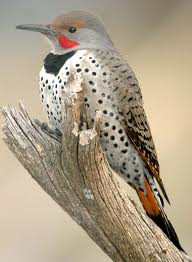
Robins by the thousands, Blackbirds by the tens of thousands, geese, ducks, a pair of Loons - waves of birds were moving north with the storm. By 11 am the winds switched to NW, stalling out the migration. Along a quarter mile stretch of the West River eight to ten Phoebes bobbed and swooped. Fields were full of Robins and Flickers. At my feeders the Junco flock quadrupled and several Fox Sparrows joined them. Two Northern Harriers teetered and circled just above the trees. A Merlin powered through the wind. For the next two or three days I will be spotting new species that came north this morning: first sightings of the spring. Favorable wind brought today's pulse of migration north. Birds don't waste energy flying into a headwind. With the next south wind many of them will be gone.
John

Friday, April 1, 2011


4-1
The neighborhood mink hunted through my yard today sending the birds and squirrels into nervous fits. Unfortunately it refuses to pose for a picture.
John

Thursday, March 31, 2011

3-31
Despite the impending nor'easter a pair of Bluebirds was busy stuffing nest materials into a bird box in my neighborhood this morning. They'll put that project on hold for a few days.
Two male Brown-headed Cowbirds showed up under my bird feeders. The females will show up in a week or two.
And along the West River a Belted Kingfisher rattled off downstream when I disturbed him.
An April snowstorm may seem like a setback to us, but to wildlife tomorrow will be just another spring day.
John

Monday, March 28, 2011

3-28
This evening a Woodcock was "peenting" in the field along Green Mt. Camp Road. I've been listening for them for at least a week. My records for the last twelve years list their return as early as 3-10 and as late as 3-29.
John
3-27
Crows have been carrying nesting material into a nearby pine woods.
The sunniest lawn in my neighborhood has a handful of crocuses in bloom.
And a gray fox scavenges under my bird feeders nightly looking for suet crumbs.
John

Wednesday, March 23, 2011

3-23
Flocks of robins are on every scrap of open field and lawn; among those I saw today one lone Northern Flicker probed and poked through the dead leaves and dry grass.
Along the West River, Song Sparrows were singing.
And in sun-warmed thickets, Lincoln's Sparrows hopped and scratched in perpetual secretive motion.
John
3.23.11 What music to waken my spirits: robins perched in the apple trees in the backyard chirruped before sunrise to welcome the day. I'm sure other birds will soon join their chorus.

Saturday, March 19, 2011

3.19.11 While I was out checking hemlocks for the woolly adelgid (count 0 for today!), I came around a giant old sugar maple with sunny side-hill exposure. A fox sparrow attracted my attention by his two-footed scratching in leaves much the same color as it is. Welcome back!

Thursday, I did make a positive identification of yet another infestation of HWA. The count in Dummerston is rising as we all get out there and look.

3-19
This morning in the alder brush next to the West River, a Phoebe tail-bobbed and hawked insects from near ground level.
John

Friday, March 18, 2011

3-18
Waves of life swept north this morning, taking advantage of the strong winds out of the WSW. In 3 hours I saw 594 Canada geese, 8 Snow geese, 12 seagulls, 9 turkey vultures, 4 Red-tailed hawks, 2 Black ducks and 2 sharp shinned hawks.
By early afternoon the wind had shifted to WNW and the migration shut down.
For the next day or two I'll keep a sharp lookout for newly returned passerine species. Lots of songbirds probably moved north on the same weather system. Some will show up at my feeders, others in the woods and fields.
Noreen has reported this morning a Great Blue Heron has moved as far north as the Rt. 142 setbacks, not yet Dummerston - but close!
Avian life forms moving up and down the globe, fueled by brief propitious weather patterns like today's, have a scope and scale and a casual ease that always leave me in awe.
John

Thursday, March 17, 2011


3-17
Early this am a small skein of geese moved north high and fast, but within range of my somewhat questionable hearing. It was great listening to them announce their passage.
Several grackles were in the trees along the West River.
A Red-shouldered hawk made its first appearance on the hillside above my house.
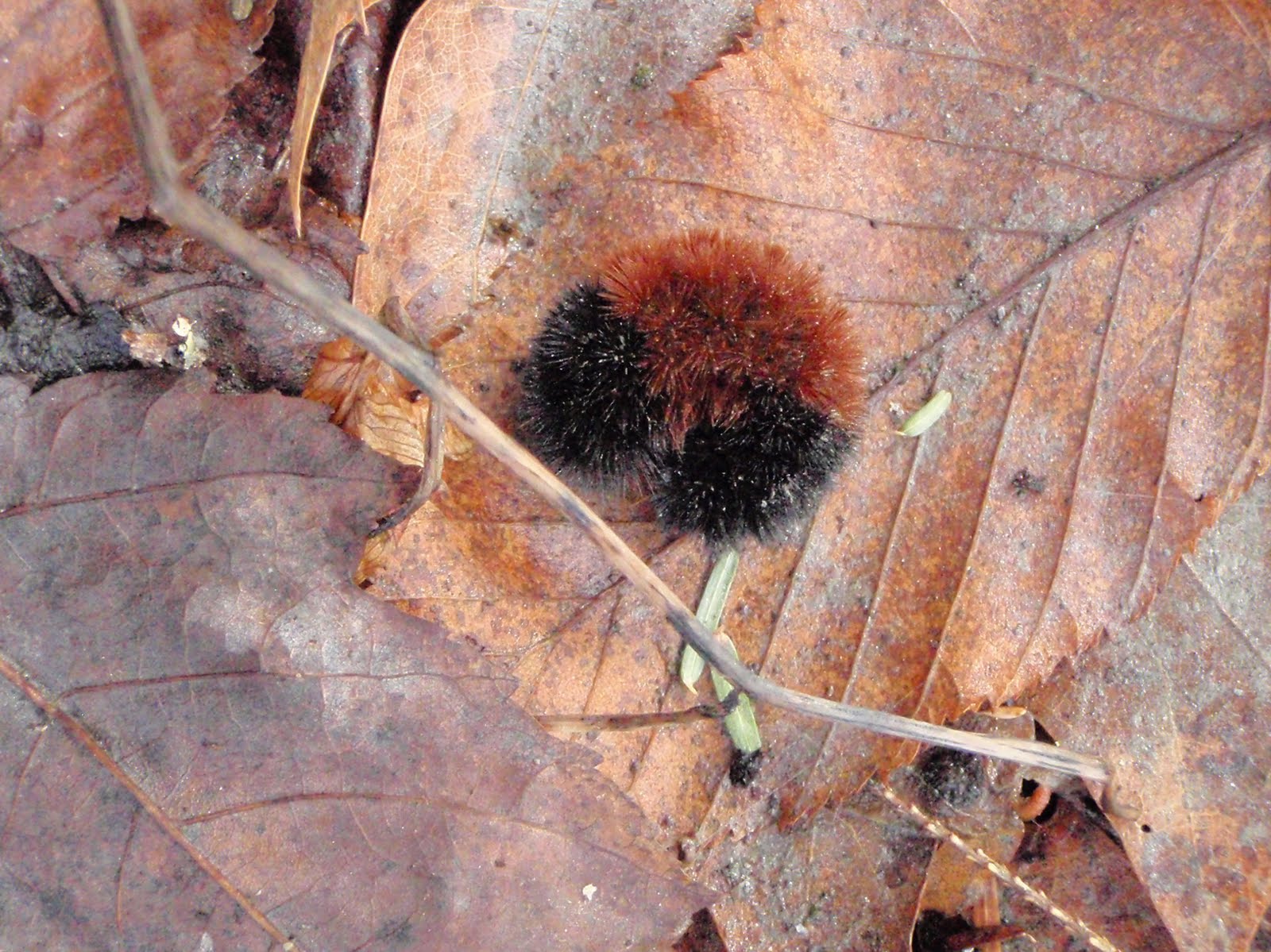
This Wooly Bear Caterpillar was crawling across Camp Arden Rd. when I found it. Very early for a wooly bear!
And this beetle crash landed on the snow as I watched. It got airborne again within a minute or two.
It felt like spring to me, and I guess I was not alone!
John

Wednesday, March 16, 2011

As I opened up my door, I noticed a wasp. A sign, but not the most wanted, of spring.

Tuesday, March 15, 2011


3-15
On a small patch of bare ground repeatedly scratched over by a dozen wild turkeys the Grouse Locust somehow managed to avoid being eaten. Grouse locust are a kind of Shorthorned grasshopper.
John

Monday, March 14, 2011

3-13
This morning a mink was hunting around my barn and house foundations. Probably it was looking for mice attracted by my bird feeders.
In the afternoon one of my neighbors reported a mangy coyote. I've seen it a few times. Its tail is ropey and it's missing the majority of its fur, yet somehow it survived the winter.
John

Wednesday, March 9, 2011

3-9
Today the male Red-bellied woodpecker that held a lone bachelor claim to my suet feeders all winter managed to attract a female. I hadn't seen a female red-bellied at my feeders since November.
On nice days they will both work on excavating a nest hole. On cold or inclement days they will both feed. Excavation will take several weeks.
John

Sunday, March 6, 2011

3-6
Today along with the starlings and red-winged blackbirds I had one Common Grackle under my feeders.
There was chipmunk scurrying around atop the snow near Green Mountain Camp.
And on the West River, two Hooded Mergansers and one Common Goldeneye bobbed between the ice-bound sections.
John

Saturday, March 5, 2011

3-5
This morning 2 dozen or more robins hopped around on the ice in the center of the West River. They appeared to be feeding ... perhaps on stoneflies?
In the sycamores, dozens of goldfinch pulled seeds from the sycamore fruit, the ball-like seed clusters.
John

Friday, March 4, 2011

3-4
This afternoon there was a turkey vulture circling over downtown Brattleboro. The sun must be warm enough to keep carrion thawed!
John

Wednesday, March 2, 2011

3-2
This morning tow or three Redwinged Blackbirds joined ten or a dozen starlings around my feeders. They were the first I've seen this year. Seeing them was a hint of spring ... when I hear them, it will be a promise.
John

Tuesday, March 1, 2011

3.01.11 The last few days of snow, followed by sleet and rain have made off-road travel challenging for most mammals - even those on snowshoes. I ventured out this afternoon and soon appreciated what it must be like for deer as every laborious step broke through the icy crust, and every foot-lift brought up a chunk of the frozen surface. I did get so far as to check out the otter's wintering area. Fresh tracks have packed down the entrance to its hole in the bank of the pond and the short path to the open water. A trough in the snow revealed where it moved between another nearby pond and this one probably just before the sleet started on Monday morning.

Saturday, February 26, 2011

Smelled my first skunk on the East-West Road Friday morning, just as the snow was beginning.

Does that mean they have woken up from their winter nap and are mating?

Wednesday, February 23, 2011

2-23 Last Friday the temp spiked briefly up to 58 degrees F. on my thermometer. Those few hours of warmth changed a bird feeder dynamic which had held since Oct.
All winter two Yellow-bellied Sapsuckers had frequented my suet feeders: one juvenile and one adult female. And the juvenile always dominated, driving the adult away from the feeders. The adult only fed if and when the juvenile was either sated or absent. (Perhaps a mother deferring to her young?)
Since last Friday I have seen both sapsuckers foraging on apple and soft maple trees, but not at my feeders. And, this morning, with the temp. at 1 degree above zero I watched the adult female drive the juvenile away from the vicinity of the feeders. Every time the juvenile flew toward a suet feeder and tried to land, the adult dove into its flight path and herded it away.
Apparently the adult female now claims the feeders as part of her nesting territory. And apparently last Friday's warmth triggered that territoriality in her.
The newly dominant adult female will - along with her as yet absent mate - spend many weeks chiseling out a nest cavity in which she will lay her eggs this April.
Establishing a territory is the first step toward the great spring reproductive pulse. For sapsuckers here in my yard that season started last Friday afternoon. I seldom see such tipping points so neatly delineated... although they probably are. Our powers of observation are not geared to such subtleties. John

Tuesday, February 22, 2011

2-21
Despite the wintry temperatures, there were skink tracks in the dusting of new snow on my front walk this morning.
John

2-22
Four degrees this morning by my thermometer, but a chipmunk was awake and active, scurrying across Green Mtn. Camp Rd.
John

Saturday, February 19, 2011

2-19
Yesterday was warm enough to start a raccoon wandering. It filled its belly with suet and sunflower seed at my bird feeders early last night.
This morning eight turkeys, all bearded, spent half an hour gleaning spilled seed under the feeders. Come warmer weather, competition for hens will make them less tolerant of each other.
Yellow-bellied sapsuckers - regulars at my suet feeders for the last several frigid weeks - foraged on nearby apple and soft maple trees and totally ignored the easy but unnatural pickings at the feeders.
John
I was following the tracks of a fisher- surprisingly it was not bounding but walking- when I came upon a hollow circle (sort of an oval) in the snow. I'd never seen this before, but I think I found where a fisher had been sleeping.

Friday, February 18, 2011

2-18
Today a pair of Hooded Merganser rested on the ice next to a meandering channel of open water in the center of the West River. Minutes after I spotted them, they flew north up the valley.
John

Wednesday, February 16, 2011

2-16
This morning a Mourning Dove called persistently from a tree near my yard. It was the first sign of the lengthening days that I'd heard from the doves.
About 40 Cedar Waxwings clustered in the top of an old apple tree - all of them facing the quadrant of the sky where the sun should have been, yet to my senses the overcast blocked any of the sun's warmth from reaching them
And, in the sumac patch near the river, Robins fed on the hard fuzzy seeds.
As a bonus, a Pileated Woodpecker made a few appearances around my neighborhood. I had not seen a pileated in months. I'm sure they were around - as was I - yet we hadn't crossed paths for a while.
John

Sunday, February 6, 2011

2-5
This morning there was a Song Sparrow deep in a multiflora rose tangle near Camp Arden Rd.
Song sparrows are known to occasionally winter this far north, but usually I don't see them during the winter. They are, however, always among the earliest to show up in the spring.
John

Friday, February 4, 2011

Driving to the Overflow Shelter at 12:30 a.m., i followed a fox on the East-West Road for about 300 yards. Running 20 mph.

He turned in at the Veterinary Clinic. Going to visit some friends?

Sunday, January 30, 2011


1.30.11 There weren't a lot of animal tracks where I went snowshoeing today, but I found these two woodpecker holes in beech trees which serve as caches providing easy winter access well above the snow line.

Thursday, January 27, 2011


1-27
Fiercely insectivorous Short-tailed Shrews - which normally eke out and extremely tenuous winter time living under the snow pack - have found easy times in the crawl spaces and stone work under my house. Shelter from the wind, warmer temperatures and prey species can all be found there. Short-tailed shrews eat mostly invertebrates but they also eat larger prey such as other shrews and mice. The saliva of short-tailed shrews is venomous and its bite paralyzes prey species before it eats them. These shrews are very common and they are very fierce; they don't willingly share their territories ... yet they seem to be proliferating under my floors.
That's okay. I don't begrudge them the space, and they keep invertebrate levels in check.
John

Tuesday, January 18, 2011


1-18
This morning during the snow storm this mink was hunting around my house and barn, and even under the barn. It circled the house at least twice, often within 1 to 2 feet. It was into and out of all of my stone walls.
Strangely enough I first spotted it coming down out of one of my big old locust trees. I think it was the first time I ever saw a mink up a tree.
John

Wednesday, January 5, 2011


In Westminster, I came upon a deer that was completely eaten by coyotes, even the bones. First is the area of the kill with 10 feet long of just deer hair, and then the remaining parts which is only the skin (pelt). On the other side of the road, I came upon tracks where 4 coyotes were hunting together.

Sunday, January 2, 2011


1.02.11 The river otter I've been following for 2 years is making his rounds of the local ponds again. Today I followed his track as he bounded and slid from one pond to another about one-half mile away. It followed a mostly-open brook, occasionally dipping in and out, but mainly took the snow-slide option. It terminated at a previously-used dugout, making many muddy tracks in and out. If I'm lucky someday, I'll get to see more than tracks!
1-3
A small flock of robins was feeding with starlings on the morning of 12-31. They were all eating bittersweet and, I assume, broadcasting its seeds
This morning I saw a Carolina wren near the house of one of my neighbors. Carolina wrens are among the southern species that are expanding their range north.
John

Saturday, January 1, 2011


I was in Guilford and I started following a deer path and noticed there was blood in the snow. It was not from the leg, but from the center--between the tracks. Then I found what I think is where the deer had a miscarriage. You just never know what you'll find.

Thursday, December 30, 2010


12-30
Today for the first time this winter I had a Redpoll at my feeders.
Redpolls are arctic birds that move south in times of seed shortages. Often they arrive in large restless flocks, but so far I've seen just the one.
John

Saturday, December 18, 2010


A heron was at a frozen pond this morning in East Dummerston. I think he wanted food. He flew off toward the Retreat Meadows after about thirty minutes.

Friday, December 17, 2010


12-17
This morning a Yellow-bellied Sapsucker visited my suet feeder. For at least the last 3 winters sapsuckers have overwintered here, although range maps show Conn. to be the northern limit of their winter range.
Last winter we also had a Northern Flicker overwinter with us, and frequent our feeders. Range maps show the northern limit of their range to be south of Vermont.
And while these sitings might be the result of the ongoing global warming episode, I suspect that bird feeders were also a factor in the decision of each species to overwinter.
A consistent supply of high energy foods - normally lacking during the winter months - probably made migration an unnecessary risk for them!
John

Thursday, December 16, 2010

12-16
This morning a Northern Harrier was hunting over nearby fields.
The migration of northern harriers is often described as "protracted." Spring migration happens over the three months from early March through late May. Fall migration starts in mid-August and ends four and a half months later in late December.
Therefore, it's possible to see migrating harriers during at least 7 if not 8 months of the year!
John

Wednesday, December 15, 2010

Gray fox tracks-Coyote tracks heading to Miller's Orchard. Hmmm rotten apples to eat.

Tuesday, December 7, 2010


12-7
Bush Honeysuckles show their alien invasive eagerness to leaf before native species, unfurling new growth in sheltered spots around my neighborhood this week. Twenty eight degrees with a brisk NW wind apparently feels like spring to them.
John

Sunday, December 5, 2010


12-5
Horse-nettle (Solanum Carolinense), a relative of the Tomato, brightens an otherwise drab field with its abundant yellow-orange berries.
Meanwhile, this dandelion is making one last futile effort at reproduction in a world stripped of pollinators.
John

Thursday, December 2, 2010


12-2
As of this afternoon, Creeping Buttercups still have healthy green leaves and one fresh faced flower in one damp but absolutely optimal micro-climate in my neighborhood.
John

Monday, November 29, 2010


11-29
These Camel Crickets (AKA Cave Crickets) are among the 75 or so individuals that will overwinter safely in the confines of my spring house. They will endure about 7 months of the 'house arrest' as leaving before spring would be fatal.
These crickets are deaf, wingless, nocturnal and they have no mechanism with which to produce sound. Usually they are found under rocks and rotten logs, or in basements or caves. They have extremely long feelers with which to explore the world.
Camel Crickets are genus Ceuthophilus but according to the Audubon Society Field Guide to No. Amer. Insects and Spiders, "Only a specialist can reliably identify species."

Sunday, November 28, 2010


11-28
The Common Periwinkle (vinca minor) can be uncommonly hardy, as these flowering today in a sheltered Hague Rd. yard can attest. A few years ago during an unusually warm January we had some flowering in our woods.
Periwinkles are an introduced species; a garden escape growing wild. They are also known as Running Myrtle.
John

Monday, November 22, 2010


11-22
Red Clover, asters and goldenrod can all still be found flowering in sheltered locations.
John

Sunday, November 21, 2010


11-21
Black alder (Ilex verticillata) also known as Winterberry and as Christmas Berry brightens the bank of the West River on a recent gray November day.
John