7-9
Catnip crops up occasionally in waste places.

There are also 5 different mountain mints said to grow in Vermont (15 in the northeast). This one appears to be Whorled Mountain Mint. Look for it in moist meadows and swales.
John

7-9
Catnip crops up occasionally in waste places.
There are also 5 different mountain mints said to grow in Vermont (15 in the northeast). This one appears to be Whorled Mountain Mint. Look for it in moist meadows and swales.
John
7-8
Wild Marjoram occurs occasionally on roadsides and in old fields.

Wild Thyme shows up in fields along roads and in old cemeteries.

Garden Phlox is an escape now established in woods and along edges.
John

7-7
Bristly Sarsaparilla favors open woods and clearings. I see it on roadsides and under power lines.

Low meadows and, bogs and river banks are home to Canadian Burnet, a member of the rose family.

The colony forming, invasive, Purple Loosestrife is coloring swamps, wet meadows and river banks.

And a rather handsome skunk spends its evenings in my yard.
John

7-6
Roadsides, railroad ballast and other such dry inhospitable habitats host Spotted Kanpweed.

Early Goldenrod is a common component of fields and edges.

A pair of half grown Cottontails licked road dust seemingly oblivious to my car.
John

7-5
Moist, often shady, places are home to both Pale and Spotted Touch-me-nots, AKA Jewelweeds.
 |
| Pale Touch-me-not |
 |
| Spotted Touch-me-not |
A batch of half grown Hooded Mergansers rested on a log this morning.

A pair of fawns picked a rather inappropriate place to nurse.
John

7-4
Moist thickets, shores and meadows are home to Blue Vervain.

Wintergreen, AKA Checkerberry, a woodland species, is in flower. Its leaves taste strongly of wintergreen. Its fruit is a bright red edible berry.

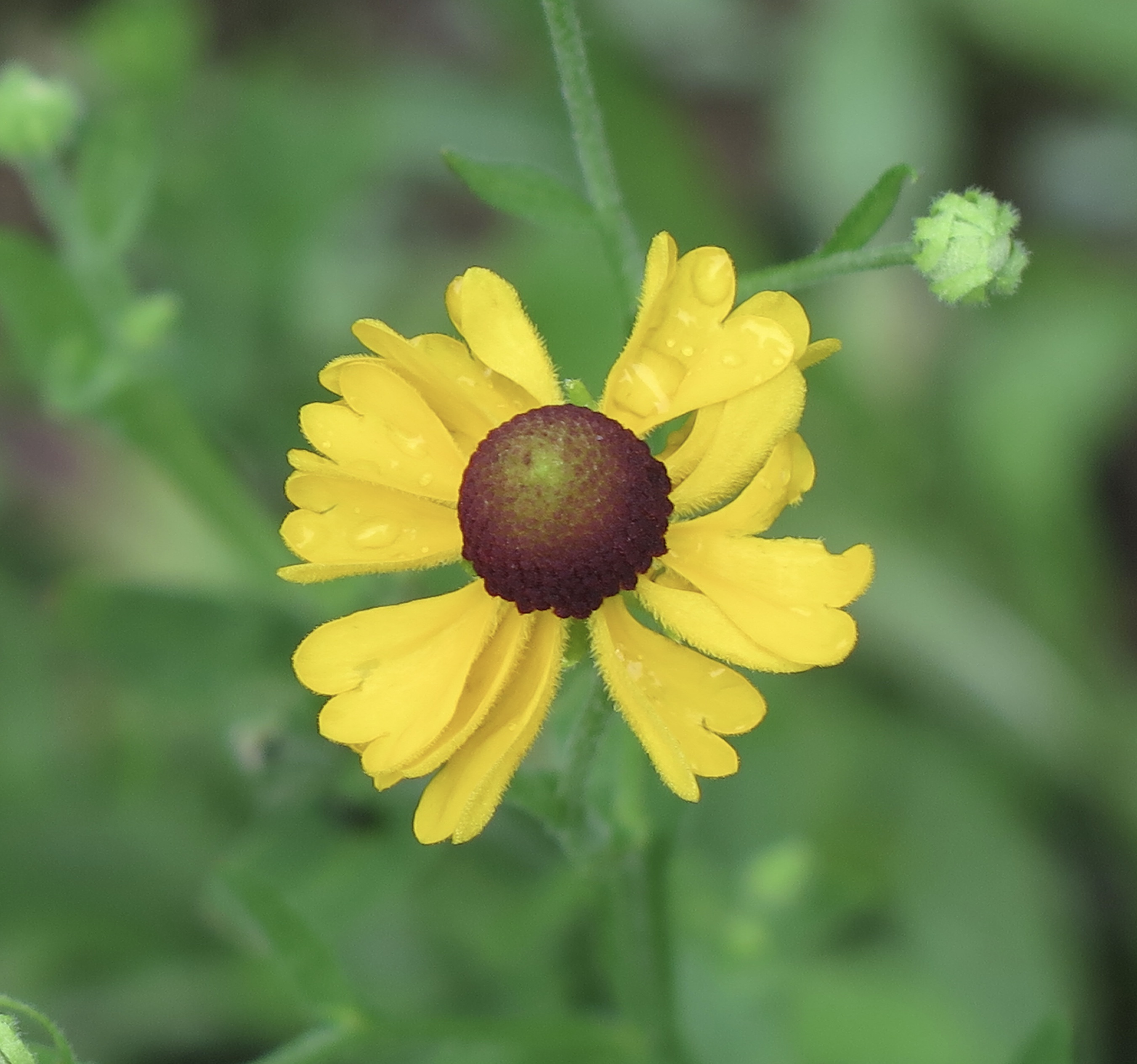
Purple-headed Sneezeweed, a southern species introduced locally, inhabits fields and roadsides. Wedge-shaped three lobed flower rays make identification of this plant easy.
John
7-3
Marsh Hedge Nettle, a member of the mint family, favors low meadows, swamps and shores.

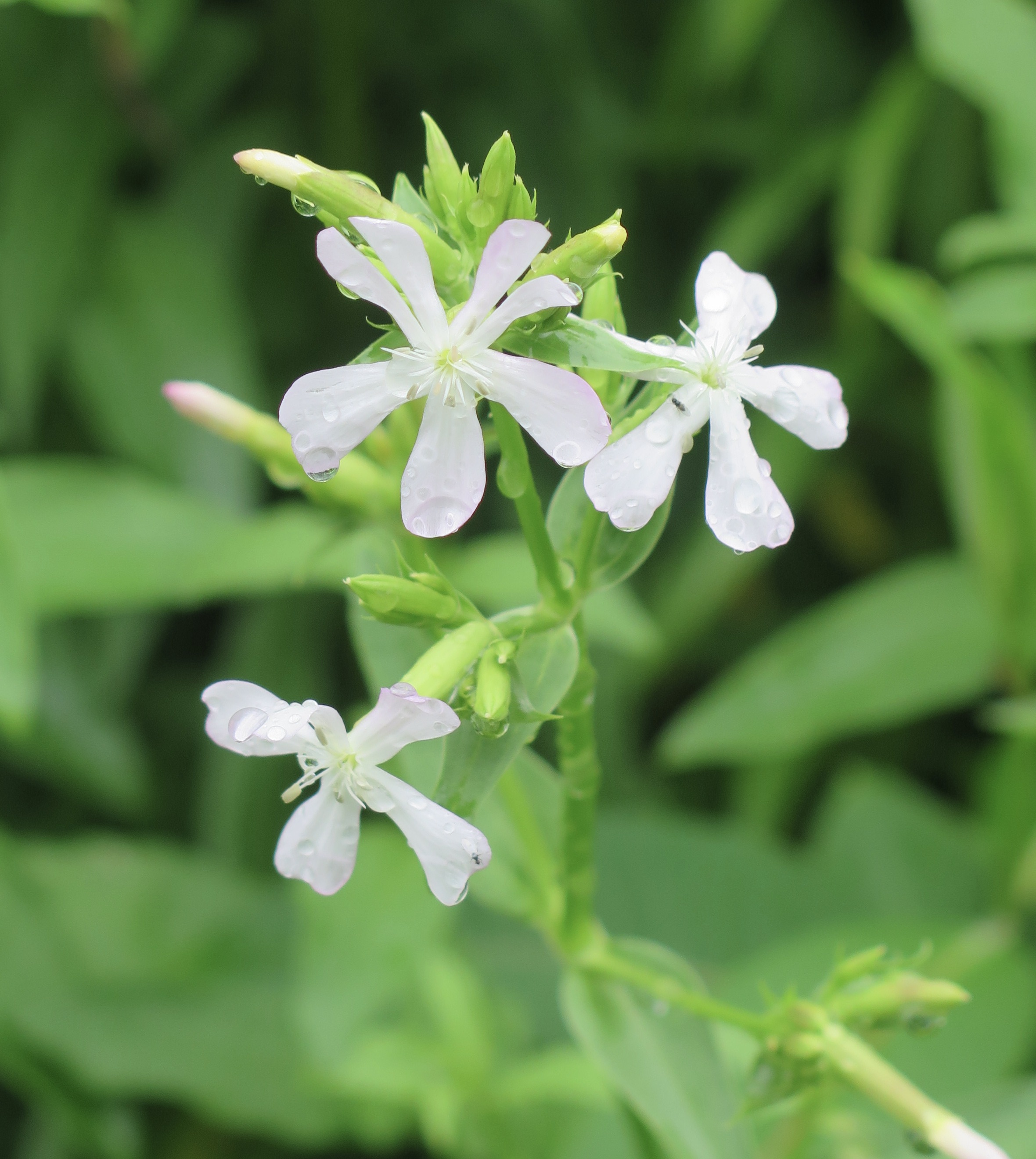
Bouncing Bet, AKA Soapwort, is common along roadsides and in waste places. The sap of this plant is used like soap and produces a very soap-like lather.
Quiet ponds are home to Sweet Scented Water Lily.
John

7-2
Canada Lily, AKA Meadow and Wild Yellow Lily, graces meadows and wet thickets with its whorls of nodding bells.

Show Tick Trefoil - one of 9 Tick Trefoils listed by my field guide - is opening its pea-like flowers on banks and along roadsides.
John

7-1
White Wood Asters thrive in dry woods and clearings.

Fields and meadows are said to be the preferred habitat of Whorled Milkwort. I find it in sandy - often dry - locations.

Indian Pipe, AKA corpse Plant is a chlorophyll-less myco heterotroph taking nutrients from fungal networks that in turn are in mutual arrangements with green plants.
John

6-30
New Jersey Tea - a Buckthorn relative - thrives in dry open woods and on rocky banks.

Pipsissewa, AKA Prince's Pine, is an evergreen component of dry woods.
John

6-29
American Basswood, AKA Linden and Bee-tree, has opened its yellowish white, dangling, heavily scented flowers. Its long-stalked flower clusters hang from the middle of leafy greenish bracts. The nut-like drupes that eventually form are dispersed helicopter fashion by the wing-like bracts. Basswood is a moist soil component of deciduous forests.
John

6-28
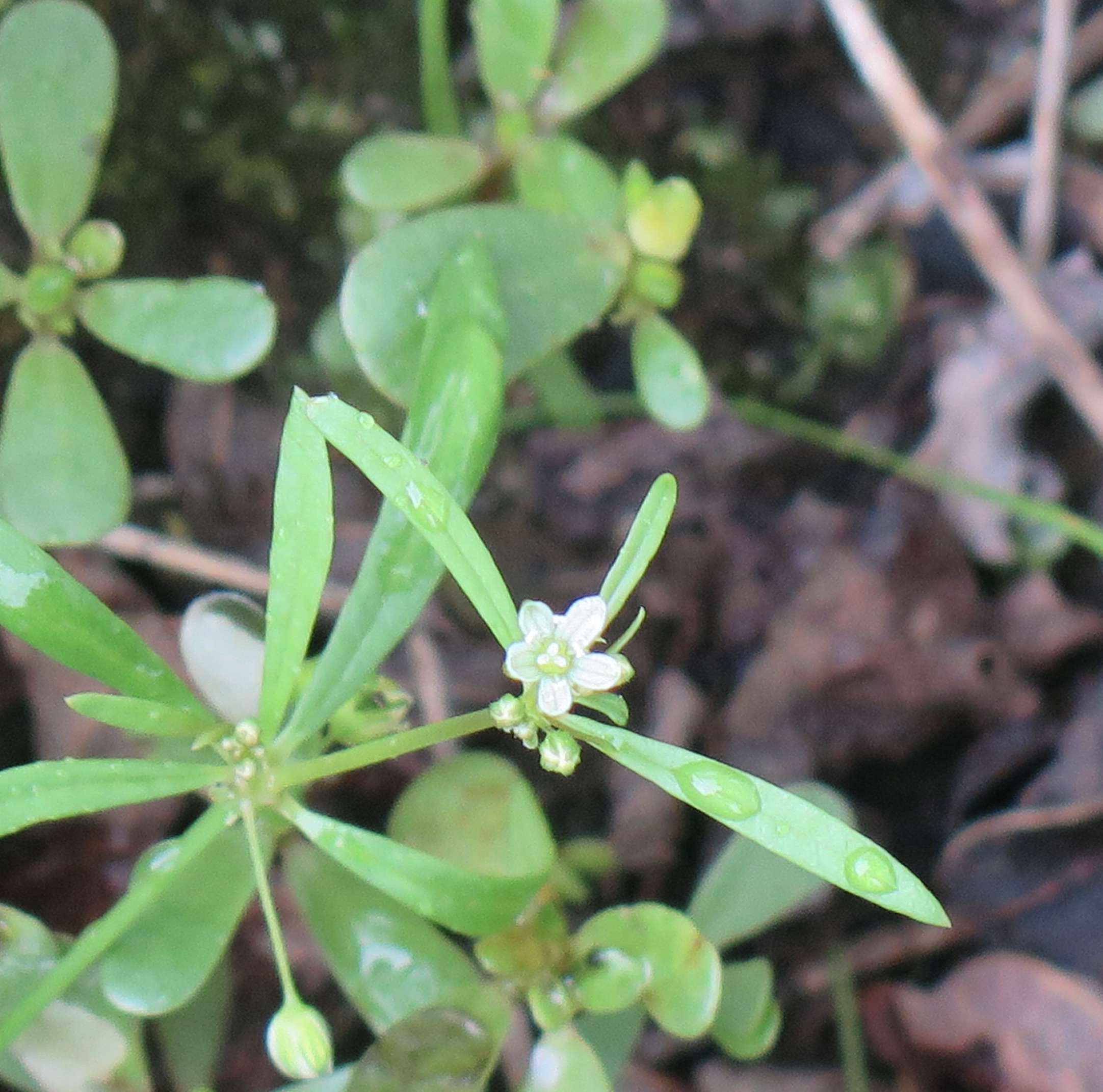
Carpetweed, an obscure prostrate species that inhabits gardens and other disturbed areas, has opened a few tiny flowers.
Whorled Coreopsis, native from Maryland south and a garden escape here, is seen occasionally in our area.
John

6-27
Shores and moist thickets are home to Fringed Loosestrife which was given its common name because of its hair fringed leaf stalks.

The dangling waxy cup flowers of Shinleaf, the most common member of the Pyrola clan, shine above either moist or dry woodland habitats.
John

6-26
The flowers of Monkey Flower supposedly bear a resemblance to the face of a monkey. Look for them in wet places.

Roadsides and waste places are home to the alien (occasionally cultivated) Butter-and-eggs.

Smooth Winterberry - a late bloomer in the holly family that will hold its bright red berries long into the winter - graces wooded swamps.
John

6-25
Cow Wheat is an easily overlooked hemiparasitic component of dry woods.

Stream banks and low meadows are home to Great Angelica which may reach as much as ten feet tall.

And Venus's Looking Glass - so called because of the shape of its seeds - is flowering. I see it on dry rip-rapped banks, the edges of cornfields, gravel parking lots and similar, thinly vegitated sites.
John

6-24
Queen Anne's Lace, AKA Wild Carrot, is a common component of fields and weed patches.

Roadsides are prime habitat for Common Mullein.

Agricultural fields and roadsides are home to Field Peppergrass.
John

6-23
Oval, shiny iridescent Dogbane Beetles feed exclusively on spreading Dogbane.

Fields and waste places are home to Common St. Johnswort, once a troublesome invasive that is now controlled by an introduced beetle.

Musk Mallow shows up along roadsides and the margins of agricultural fields.

And Common Elder is coloring moist places especially thickets.
John

6-22
Everlasting Pea is a roadside escape from cultivation and is sometimes introduced for erosion control.

Rich moist woods are home to Indian Cucumber Root, a member of the Lily family.

And Hop Clover, AKA Yellow Clover, is having a banner year, carpeting roadsides.
John


