Welcome

To all those interested in the natural world. Please add your sightings.

In the woods we return to reason and faith-Emerson

Best-Lynn

Wednesday, June 14, 2023

6-14 Lance-leaved Coreopsis, Tall Meadow Rue, Nipplewort and Snapping Turtle

 6-14

Lance-leaved Coreopsis has escaped from cultivation to fields and roadsides.


Sunny swamps and low meadows are home to Tall Meadow Rue.


roadsides and waste places harbor Nipplewort, so called because of the shape of its leaves.


And a large Snapping Turtle - presumably a female seeking a place to lay eggs - had wandered far from her home pond this morning.

John


Tuesday, June 13, 2023

6-13 Galinsoga, Selfheal, Carrion Flower and Woodchuck

 6-13

Galinsoga, AKA Quickweed, sometimes derisively referred to as Gallant Soldier, is a common weed of gardens and waste places.


Selfheal, AKA Heal-all is common in lawns, fields and roadsides.


Carrion Flower's ill smelling flower umbels drape through thickets and weed patches.


And a very young, very small Woodchuck had apparently not mastered the art of concealment.

John


Monday, June 12, 2023

6-12 Goutweed, Yellow Pond Lily and Loons

 6-12

Goutweed, a garden escape, favors moist shady places.


Yellow Pond Lilies can be seen in ponds, lakes, streams and ditches.


Two Loons are idling away the days at Sunset Lake although not necessarily a nesting pair.

John


Sunday, June 11, 2023

6-11 Panicled Dogwood, Alfalfa, Hairy Vetch

 6-11

Panicled Dogwood, AKA Gray Dogwood, dots roadsides and thickets.


Alfalfa, cultivated as fodder, has escaped to roadsides and waste places.


The bi-colored flowers of Hairy Vetch drape field grasses and roadside weeds.

John


Saturday, June 10, 2023

6-10 Orange Hawkweed, black-eyed Susan and Emerald Euphoria

 6-10

Orange Hawkweed, AKA Devil's Paintbrush, has joined its many yellow relatives in fields, pastures and waste places.


Black-eyed Susans are unfurling their petals


A common scarab beetle with rather grandiose name of Emerald Euphoria was feeding on Dogbane this afternoon.

John


Friday, June 9, 2023

6-9 Cow Parsnip and Common Milkweed

 6-9

Cow Parsnip which can reach 10 feet in height favors moist rich ground.


Common Milkweed colonizes fields and roadsides.

John


Thursday, June 8, 2023

6-8 Ladies Tresses, Alsike, Camouflage Looper

 6-8

Wide leaved Ladies Tresses, AKA shining Ladies Tresses, favor riverbanks, seeps, fens and limey areas.


The alien Alsike or Alsatian Clover's pinkish flower heads dot fields and roadsides.


A camouflage looper, larva of the Wavy-lined Emerald moth, attaches fragments of whatever plant it's feeding on to its back. My field guide refers to this species as, "A Mardi Gras caterpillar that's only out of costume after a molt."

John


Wednesday, June 7, 2023

6-7 Cuckoo Flower and Bittersweet Nightshade

 6-7

Cuckoo Flower, AKA Lady's Smock, is a flower of wet meadows and swamps.


Moist thickets harbor Bittersweet Nightshade.

John


Tuesday, June 6, 2023

6-6 Two Cinquefoils, American Brooklime and Lesser Toadflax

 6-6

Rough Cinquefoil can be found in clearings, along roadsides and in waste places.


Rough-fruited Cinquefoil, AKA Sulphur Cinquefoil, favors dry fields and roadsides.


Railroad ballast, roadsides and dry weedy places host Lesser Toadflax.


American Brooklime, AKA American Speedwell, thrives in swamps, wet ditches and shores.

John


Monday, June 5, 2023

6-5 Daisy Fleabane and Whorled Loosestrife

 6-5

Daisy Fleabane, AKA Sweet Scabious, is a common plant of fields and waste places.


Whorled Loosestrife can be seen in woods and thickets and on shores.

John


Sunday, June 4, 2023

6-4 Wild Basil and Carpenter's Square

 6-4

Woods and borders are prime habitat for Wild Basil.


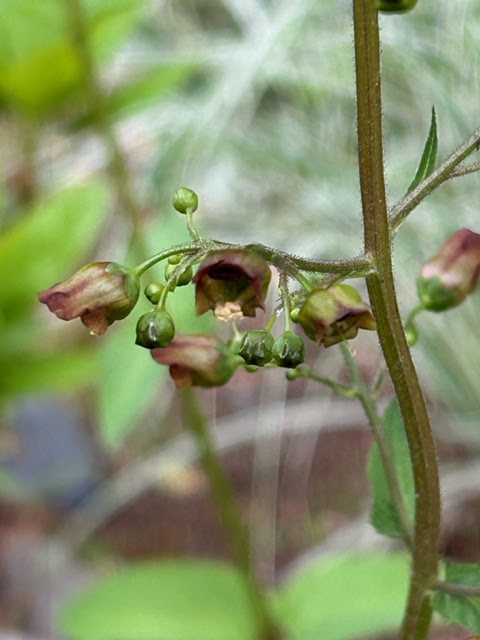
Carpenter's Square, AKA Maryland Figwort, can be seen in woods and thickets.

John


Saturday, June 3, 2023

6-3 Harebells and Thimbleweed

 6-3

Harebell, AKA Bluebell, is starting to flower. It can be seen on ledges, rocky banks , shores and meadows.


Rocky woods and banks are home to Thimbleweed, AKA Tall Anemone. The thimble in the common name Thimbleweed refers to the shape of its seed head.

John


Friday, June 2, 2023

6-2 Maple-leaved Viburnum, Pasture Rose, Multi-flora Rose, Northern Bush Honeysuckle

 6-2

Maple-leaved Viburnum - one of 8 viburnums found in our area - can be seen in dry or rocky woods. Another name for this shrub is Dockmackie.


Pasture Rose favors dry, rocky or sandy soil.


Multi-flora Rose is a garden escape now running rampant in moist thickets and along roadsides.


Northern Bush Honeysuckle, the only honeysuckle with toothed leaves, can be seen in edge habitats and in dry rocky woodlands.

John


Thursday, June 1, 2023

6-1 Mountain Laurel and Common Sorrel

 6-1

The showy terminal flower clusters of Mountain Laurel are just starting to open. Look for it on Black Mountain and other similarly rocky woods.


Cool damp woods are preferred habitat for Common Sorrel.

John


Wednesday, May 31, 2023

5-31 Spreading Dogbane and Common Speedwell

 5-31

Spreading Dogbane favors dry fields and thickets. Its nodding white or pink flowers are pollinator favorites.


Waste places and old log roads are habitat for Common speedwell, one of eleven speedwells found in our area.

John


Tuesday, May 30, 2023

5-30 Small Sundrops, Blue Flag Iris, Cow Vetch

 5-30

Small Sundrops - diminutive members of the Primrose family - are up in open woods and fields.


In marshes and meadows, Blue Flag Iris is having its day.


And along roadsides and in meadows Cow Vetch, AKA Tufted Vetch, is attracting an array of pollinators.

John


Monday, May 29, 2023

5-29 Common Flax, Maiden Pink and Yarrow

 5-29

Common Flax is an escape from cultivation or, sometimes, a component of conservation mixes. I find it in waste places.


Maiden Pink, another escape, has colonized fields and roadsides.


Yarrow has started its long flowering season which lasts into the fall! Like the previous two species Yarrow is an introduced alien.

John


Sunday, May 28, 2023

5-28 Round-leaved Ragwort, Ox-eye Daisy and Sleepy Catchfly

 5-28

Round-leaved Ragwort can be found in woods and on sandy or rocky banks.


Ox-eye Daisy is very common in fields, meadows and waste places.


Sleepy Catchfly has a sticky insect deterring stem and is only open briefly in full sunlight - likes dry thinly vegetated areas. I see them on rip-rap and on sandy roadsides.

John