9-28
Water Smartweed, a plant of ponds and wet shores, is in full flower.
John


9-27
Woolly Bear Caterpillars, larva of Isabella Tiger Moth, are looking for sheltered places to overwinter. This species produces two generations a year.
John

9-13
Sand Jointweed is among the last flowerings of the season. Only Witch Hazel flowers later.
John


8-25
Sand Jointweed's racemes of pink or white flowers are starting to open. As the name implies this species favors sandy soils.
John
 |
| flower enlarged |

8-24
This summer's wet conditions favor New England Aster. Look ofr them in damp meadows and along shores.
John

8-23
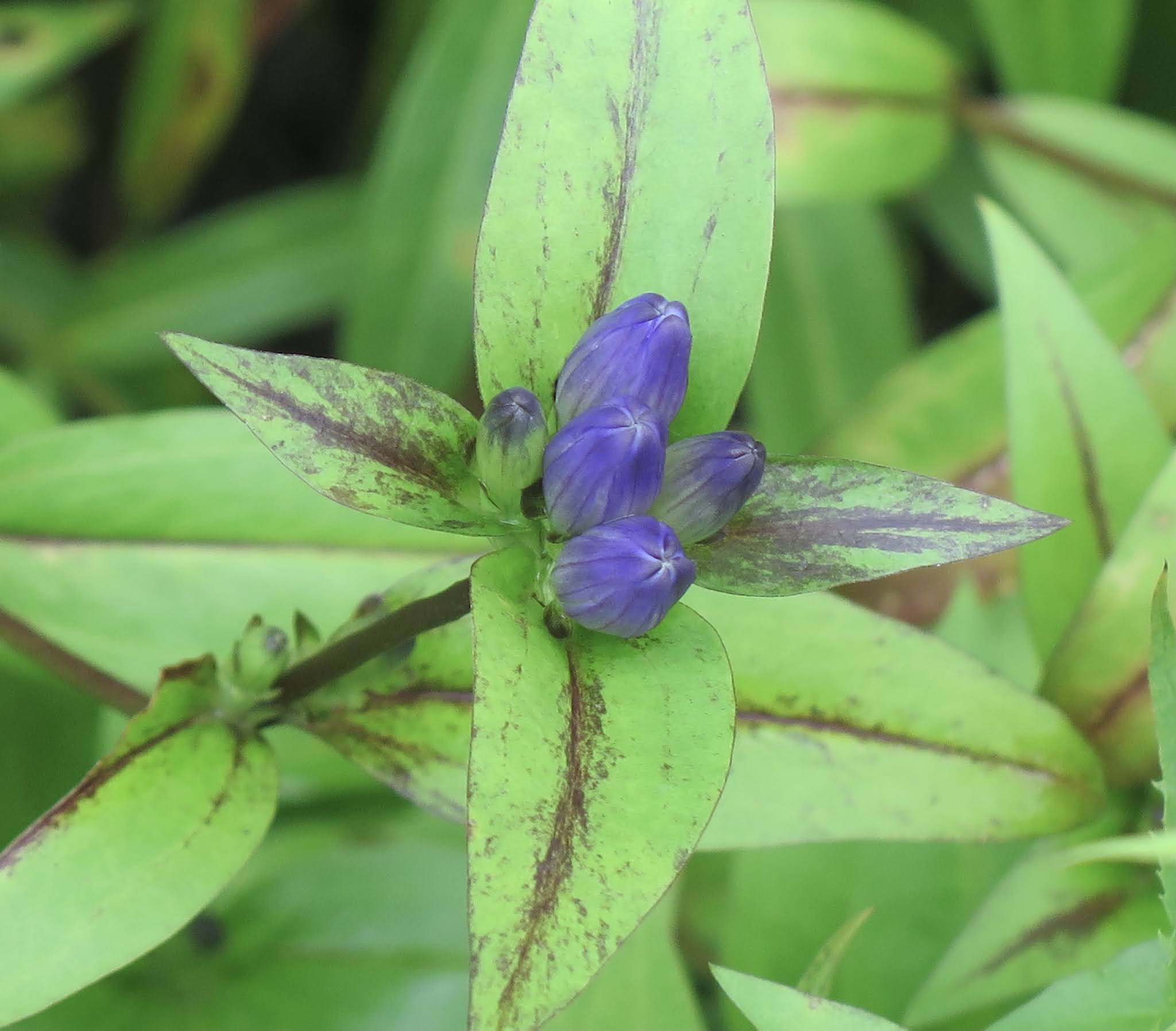
Closed, AKA Bottle, Gentians are turning from green to blue-violet. These flowers never open, yet Bumblebees routinely enter them.
John
8-22
Nodding Ladies Tresses flower in late summer and fall. Look for them in moist meadows, swamps and open woods.

Round-headed Bush Clovers are flowering in dry fields. Some of its flowers are self-pollinating and never open.
John

8-20
The rayless flowers of Beggar Ticks, AKA Sticktight, can be found in either wet or dry waste places. (Incidentally, this plant is an aggressive invasive in New Zealand!)

John

8-18
Canada Hawkweed graces the borders of woods and clearings. There are. 8 other Hawkweeds listed in Newcomb's Wildflower Guide.

A Snowberry Clearwing moth was nectaring on Phlox in my garden today. Normally active at dawn and dusk (crepuscular). They are also active on overcast days.
John

8-17
Common Clotbur is in flower - in its own unglamorous fashion. Look for it in farmlands and along roadsides.

Scaly Inky Caps mushrooms can be seen clustered on woody debris, especially that of Ash and Elm.
John

8-16
Purple Gerardia has opened a few flowers. Look for it in wet meadows and along shores.
John

8-14
Dodder twines tightly around the stems of other plants and feeds on their sap. Look for it on low ground, especially river banks. Along with Common Dodder ten other species of Dodder are found in our area, all parasitic.
John

8-13
Eastern Willow Herb can be found in swamps, wet thickets and similar damp areas.

White Goldenrod, AKA Silverrod, is opening its trademark florets in dry woods, along roadsides and in any rocky terrain.
John

8-12
Velvetleaf, AKA Indian Mallow, does indeed have velvety leaves. I find it along the edges of cornfields.

Common Arrowhead is a plant of shallow water and marshes.
John

8-11
Red Bartsia thrives in the low fertility soils of road verges, railway rights-of-way and similar waste areas. To compensate it is partially parasitic gaining nutrients from the roots of nearby grasses. It can be an agricultural pest outcompeting forage crops in farm fields.
John


